


The Greatest Albums of 2013


A top 10 featuring country, folk, and jazz - Is this 2013 or 1963? I suppose the inclusion of Daft Punk and Beyonce make the modern vintage pretty clear.
Against my better judgment, I’m undertaking a project to determine my top 10 albums of every year since 1960. Instead of just picking my favorite stuff out of my collection, I intend to explore, re-visit and discover. While I can’t promise to leave no stone unturned, I am going to go deeper than I ever have before. Why would I partake in a journey that will inevitably take many years and that I ultimately may never finish? Most importantly, to uncover great music that I’ve never heard before. Second, to boost my knowledge of music history and get a sense of what was happening at a macro scale in a snapshot of time. Finally, I want to share my passion for music with you and, fingers crossed, generate a dialogue down in the comments. So without further ado, here is #39 in the series. My random number generator tells me that our next year to explore is 1972.
The Greatest Albums of 2013

I wonder how long it takes to gain perspective on an era of music. I have the sense that it used to be roughly a decade, but has now elongated to more like twenty years. In the pre and early internet eras, you had a lot of help understanding the larger trends in music from sources like MTV, The Source, Spin, Kerrang. etc. - largely because they had a hand in shaping those trends, but also because most of the music discourse was delivered via the big entertainment media outlets. Not only were metrics of an artist’s popularity less complex and more visible, you could pretty closely gauge them just by taking notice of an artist’s exposure from those purveyors of music information. Today, there are countless podcasts, blogs, and YouTube channels that discuss music culture, and they all have tiny fractions of the reach that Rolling Stone did in the 80’s and 90’s. Anthony Fantano is almost certainly the most popular music critic on YouTube, but when he reviews the latest Death Grips or .clipping album, it's because he is personally a fan, not because the culture demands attention on relatively unknown experimental hip hop collectives. At any point beyond the mid-2000’s, there are fewer prevailing narratives to draw from when trying to put together a view of “where music was at” in a given year. All of that said, I do have some thoughts about the state of the union, music-wise, in the early 2010’s, so if there are any of you who don’t just skip ahead automatically to see if I ranked your favorite albums, you can check out my largely independent and unsupported thoughts.
Trap music was well on its way to having a stranglehold on popular hip hop during this time, although it is largely absent from my list and honorable mentions. Pure trap artists like Migos, Travis Scott, and Future were topping the charts alongside trap-influenced superstars Drake and Kendrick (a good decade before they would dominate the rap conversation with their all-consuming beef.) Rock and roll… who knows? The decline of rock’s popularity coinciding with the decline of the media juggernauts that propped it up for so long has left me completely out in the cold in regards to the journey of the artform. It doesn’t help that this time frame is pretty light on rock music that I can connect with. Even more bereft is notable jazz music from this era, although that would change in a few short years. I would point to 2013 as the start of the revival of authentic country music that is still going strong more than ten years later - my number one album is the biggest indicator, but there are several works in my honorable mentions that predict the positive direction that the music was headed in. I’ll spare you my tepid takes on other genres like R&B, Electronic and Heavy Metal from 2013, but there is one more that bears discussion.
When I think about folk music (specifically Western folk music), I immediately think of the mid-sixties: Bob Dylan, Joan Baez, Simon & Garfunkel, and all the other Woody Guthrie disciples. Folk was one of the most popular musical styles amongst the youth at the time, buoyed by changing cultural norms and espcially opposition to the Vietnam War, which galvanized a movement that folk musicians tapped into with great success. The second-most-prolific era of folk music, surprisingly, may just be the late 2000s and early 2010s. I can’t point to a similar unifying ideology that demanded its own soundtrack like the one in the sixties, but artists like Neko Case and Fleet Foxes and Bon Iver managed to find plenty of creative inspiration all around the same timeframe which led to a surge in the largely dormant artform. In addition to the neo-folk albums in my top ten, 2013 boasted a healthy honorable mention section of recommendations in the genre. Perhaps in another fifteen or twenty years, when I’ll inevitably still be trying to wrap up this blog series, I’ll have a better understanding of the underlying factors that played into the genre’s resurgence, but until then you’ll just have to take the observation at face value. Enough about 2013 writ large, however, let’s get into the highlights.
Southeastern – Jason Isbell
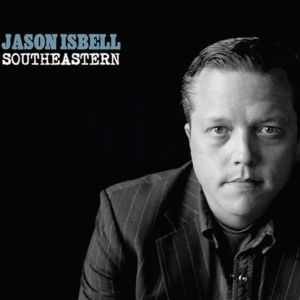
I believe that Jason Isbell is the most important country artist of this century. Part of that may be bias - Southeastern is probably my second favorite country music album after Willie Nelson’s Red Headed Stranger - but I still think it is a wholly justifiable belief. The 2000s started with country music in terrible shape. You had Toby Kieth and Rascal Flatts and Big & Rich pumping out soulless but lucrative pablum that dominated the scene. I found this era of country to be insufferable, and I pray I never have to hear “Honkey Tonk Badonkadonk” or “Tequila Makes Her Clothes Fall Off” again. To paraphrase Isbell himself from a podcast appearance several years ago, the country music establishment discovered a button that produced $10 every time they pushed it, and they never had interest in anything besides pushing that button again. That lack of creativity and diversity in mainstream releases gave rise to a movement of artists who doubled-down on lyricism, artfulness, and a personal point of view. As with any sea change in music, it isn’t as if a single musician created something out of whole cloth that inspired all of their peers, it is that we tend to ascribe a symbolic position as the face of a movement that in reality evolved from multiple different sources. Which is the position I’m ascribing to Jason Isbell - the alt-country version of Kurt Cobain, or Bob Marley, or Grandmaster Flash being the representative of a new sound that has surfaced and gained popularity. Given the testimony of similar artists that claim to be influenced by Jason’s work, the undeniable quality of the record, and the impact it has seemed to have just from discussing music with people in the years following its release, Southeastern feels like a flashpoint moment that ushered in a new era of vulnerability and sincerity in country music.
When Isbell set out to write Southeastern, he was recently sober, engaged to his fiddle player and future wife (now ex-wife) Amanda Shires, and hoping to atone for a decade-plus of alcohol-fueled bad behavior. As a result, the album is all about seeking redemption, and meeting with varying degrees of success. It opens on an absolute heater, one of the strongest four-track opening stretches of any album I can think of: “Cover Me Up” is the only track where Jason draws on his specific story for the lyrics, and it is the type of song that is so perfect it gives the immediate impression that the artist will never be able to top it.* It is beautiful and moving and probably his best vocal performance on the album. Isbell is the best non-rap lyricist in the world today, and “Stockholm” gives you a taste of that with a metaphor that likens a deep romantic infatuation to Stockholm Syndrome. It is not the most novel concept in the world, but it is elegant and poetic in execution. “Travelling Alone” tackles the common “life on the road” trope from rock and country music, but instead of pining for a left-behind family or girlfriend, the song’s subject bemoans a lack of any human connection, a condition that is both responsible for and exacerbated by his lifestyle choices. In keeping with the album’s primary themes, he yearns to make a change and become worthy of companionship. The opening stretch culminates in “Elephant”, a heartbreaking portrait of a woman with cancer and her close, platonic friend. It is a topic that could come off as unbearably maudlin in less capable hands, but Isbell frames it very smartly by withholding the nature of the song until halfway through, singing from the man’s perspective and allowing us to assume some sort of romantic situation between the two before pulling the rug out from under us. His knack for both sharp observation and well-crafted wordplay pay off in several devastating lines that never approach the easy platitudes you might expect from a lesser artist.
There are a few merely good songs sprinkled throughout the rest of Southeastern that prevent it from maintaining the consistency of its first third, but those four songs were all it took to make me a fan for life. Isbell’s lyricism is incredibly sophisticated, and producer Dave Cobb is a master at making the music sound immediate and un-fussed over, putting the emphasis squarely on Isbell’s voice and those lyrics. He writes with incredible specificity, but also knows what details are superfluous to his message, which makes his songs somehow both individualistic and universal at the same time. Take “Travelling Alone”, for instance. We never know what line of work, or other activity, has set the song’s protagonist on the road. He could be a musician, or a trucker, or a drug runner, or simply a vagabond. The concept of travelling alone, itself, is less about life on the road and more about life in general. Yet, we get lyrics like this, which paint a vivid portrait in your mind: “So high, the street girls wouldn’t take my pay; she said ‘Come see me on a better day.’, then she just danced away.” Across an album that features bar fights and murder and sexual abuse, the writing is never sensationalistic, always connecting to the humanity of the songs’ subjects. My instinct is simply to share a handful of lyrics that illustrate the primary theme of redemption, and, you know what, it's my blog and no doubt Isbell’s words will do a better job of illustrating the greatness of this record than mine could. Here you go:
“There’s a man who walks beside me, he is who I used to be,
and I wonder if she sees him and confuses him for me”
“And the story’s only mine to live and die with,
and the answer’s only mine to come across,
but the ghosts that I got scared and I got high with,
look a little lost”
“Put your faith to the test when I tore off your dress,
in Richmond on high,
but I sobered up and swore off that stuff,
forever this time”
Ironically, that last one inspires the rowdiest reaction at every Isbell show that I’ve been to or watched online. Jason had some stand-out material during his stint with the Drive-By Truckers, and his first couple of solo albums have highlights as well, but nothing could have prepared the country music community for such a perfectly well-realized project. It was no doubt the launching point for countless new fans, myself included. If you haven’t listened to it yet, I truly can’t give an album a higher recommendation. I can’t promise that it will convert any country music skeptics, but if your conception of the genre still resembles “Save a Horse (Ride a Cowboy)”, I promise this will shatter that way of thinking.
* Remarkably, he would produce another one of these career-defining type of tracks a few years later with 2017’s “If We Were Vampires”.
(link)
The Worse Things Get, the Harder I Fight, the Harder I Fight, the More I Love You - Neko Case

If Jason is the best non-rap lyricist working today, Neko makes a strong case for number two. She can be more impressionistic and free with her metaphors, but she shares Jason's gift for honing in on impactful details. Yet, it isn’t Case’s lyricism that I would point to as her greatest asset. Instead, it is her uninhibited approach to song structure. A Neko Case album is akin to a book of poetry, where some entries might be a handful of paragraphs on a single page, and others are long-form narratives. On album-opener, “Wild Creatures”, things start off conventionally enough with a lilting folk melody and a handful of verses that repeat the opening line “When you catch the light…” You might be lulled into believing that a chorus is coming next, probably followed by more verses with the repeated phrase. Instead, there is a sharp turn towards the nightmarish, with a spiraling bridge of ominous chords accompanied by the fascinating but incongruous stanza:
"Hey, little girl, would you like to be the king's pet or the king?
I'd choose odorless and invisible
But otherwise I would choose the king
Even though it sounds the loneliest
And my brother's hands would poison me"
The track highlights the elements that make Case’s best albums (and particularly this one) so special. It is completely unpredictable, both in terms of the path the music takes as well as her lyrics. Yet each musical and lyrical choice is conjured to maximize her creative expression. There is not enough space to catalogue every deft instrumental change-up or concise and evocative turn of phrase that populate The Worse Things Get…, or more precisely there is no point cataloguing them because it would simply be a description of the entire album. “Yon Ferrets Return”, “Where Did I Leave That Fire” and “Nearly Midnight, Honolulu” are all examples of tracks that don’t follow conventional song structure but deliver huge impact through fascinating musical choices, provocative lyrics, or both. Yet, lest this come off like a series of sketches or unfinished ideas, the album boasts some of Case’s most fully-formed songs, as well. My favorites are the smooth and soulful “Night Still Comes”, the breezy and playful “Ragtime”, and the surprisingly essential bluegrass reimagining of Middle Cyclone’s “Magpie to the Morning”. Yet, I feel like “Bracing for Sunday” serves as the perfect encapsulation of what Case is capable of at this point in her career. It features a wild gothic story about incest and murder with lyrics at turns cryptic and straight-forward, yet never less than enthralling. It features nimble saxophone and flute playing that seem to serve the same function as a rhythm guitar, and a pronounced mid-song tempo change that amps up the drama into overdrive. Neko delivers a crackling vocal, imbuing the song with the heft that the subject matter demands without sacrificing the combination of wryness and fury that makes her such a unique voice in folk music. Most impressively, all of that is managed in a tight, two minute and seventeen second package, although you might guess it was more than twice that length after you hear it.
The cream of the Neko Case catalogue undeniably starts with the 2006 album Fox Confessor Brings the Flood and ends with The Worse Things Get…, inclusive of 2009’s Middle Cyclone. The Worse Things Get… is probably the darkest of the three, although they all traffic in similar themes. Today, it is my favorite as well, although that assertion won’t be settled until I tackle my lists for ‘06 and ‘09 and put the other two through a similar level of examination. Regardless, you would be hard pressed to find a three-album run that I would endorse more enthusiastically than this one. Case, like Mars Volta or MF Doom, makes music that is too idiosyncratic to achieve much mainstream acceptance, but I can’t help but feel like she is severely underappreciated by both a casual music audience as well as the online music nerd communities. So I invite you to trust my recommendation and queue up this album, or better yet all three of the ones I mentioned, so we can move the needle for one of the era’s most inventive and uncompromising artists.
(link)
Random Access Memories – Daft Punk

Below is a complete accounting of the music in my collection that could be broadly described as “Electronic” music, prior to the start of this blog:
Selected Ambient Works 85-92 by Aphex Twin, a seminal work in the ambient genre that I listened to while I was working my way through 1001 Recordings to Hear Before You Die, enjoyed enough to add to my collection, and promptly never listened to again
A few jazz and hip hop remix albums by the likes of DJ Cam and Bill Laswell, which I owned specifically for their jazz and hip hop elements
Random Access Memories by Daft Punk
Now, that collection has grown exponentially since I started compiling the top ten albums of each year and especially since attending the 2024 Bonnaroo music & arts festival, but to be clear, it's a small exponent. I highlight this fact not to celebrate my very slow journey towards the appreciation of electronic music, but rather to consider what a breakthrough Daft Punk achieved with their 2013 effort. I have no idea if hardcore EDM-heads even claim Random Access Memories, but to my uneducated ears this is certainly dance music of the electronic variety, and I was far from the target audience when it came out. By comparison, Moby’s Play was released when I was in my early twenties, and that album seemed to be universally revered - by everyone except me. Despite the fact it was in perpetual rotation among my friends and acquaintances alike, I didn’t care for it and couldn’t (or willfully refused to) connect with it. I don’t bring that up in an effort to shit on Moby (although I suppose I don’t mind that as an unintended consequence), but rather to further illustrate how out of character it would have been for me to find resonance in a Daft Punk album in 2013.
Since it clearly wasn’t the EDM elements that drew me in, let's take a look at what else RAM has going for it. Namely, a significant inspiration from both disco and yacht rock. Now, those two genres are also not among my very favorites, but they certainly offered me something more familiar to grasp onto when I heard the record for the first time. Amazingly, the blend of the various musical influences is seamless, producing a pristine amalgamation that makes you feel like these different elements were destined to come together. The album gives the very specific impression that advanced alien life forms had been somehow receiving AM radio transmissions from the late 70s and early 80s, and gifted us this record as an attempt at communication. It’s an idea that is brought to life by the many robotic vocal effects and a band dress code consisting of sci-fi suits and space helmets. In this (relatively) modern time, they chose to cast the Strokes’ Julian Casablancas as Darryl Hall and the Neptunes’ Pharell Williams as Donna Summer, but the homage to the past comes through crystal clear. All of which leaves you with a record that is full of glorious contradictions: Futuristic yet old fashioned; Funky enough for a Saturday night dance party, yet serene enough for a Sunday afternoon nap; Very clearly electronic pop music, yet sitting comfortably in the top three albums of 2013 for an amateur music critic that does not generally fuck with electronic pop. Listening to it back several times in preparation to write about it, I am inclined to stick it into the rarified category of “perfectly crafted albums”, which is not precisely the same as “Lucas’ favorite albums”, but contains such undeniable gems as Pet Sounds, Aja, and Paul’s Boutique. When we do finally get access to alien transmissions from the cosmos, we’ll all be lucky if they are as groovy as Random Access Memories.
(link)
Doris – Earl Sweatshirt

For the first few decades of its existence, hip hop could be reliably subdivided into a handful of categories. Individual artists would certainly differentiate themselves within their lanes, of course, but those lanes had clearly defined boundaries. Through the nineties and early aughts, entirely new lanes would occasionally pop up, slowly expanding the breadth of acceptable hip hop styles. For the past fifteen or so years, however, individual artists have started to break through with completely idiosyncratic approaches. Little Simz, Playboy Carti and McKinley Dixon are all one-of-one, operating independently in their own tiny lanes. That means that the variety of hip hop has exploded, sometimes mostly beyond recognition. For any individual listener, that is bound to lead to mixed results: I adore Little Simz and the artistic choices she makes, but Playboy Carti’s music completely baffles and alienates me. When Earl Sweatshirt returned to making music in 2013 following his multi-year sabbatical from Odd Future, he absolutely carved out his own lane. Doris is gritty, langorous, low-fi and savage, in a precise combination that makes it the first of its kind. It is easy for me to imagine that a rap fan could listen to it and be left feeling as baffled and alienated as I do when I listen to Die Lit. It isn’t hard, in fact, to imagine that I would feel that way listening to Earl skulk over unhurried, moody beats. but instead, Doris seems to be tuned into a precise frequency that resonates with me.
Earl is not the most dynamic rapper in the world, but he is impactful. He's a strong lyricist, and he delivers his verses with a laconic growl that suggests a more authentic hostility than the spitting and barking of countless emcees who want desperately to sound hostile. Go watch an old WWF Superstars taping and you’ll hear innumerable one-note promos by muscle-heads that all shout at the same frequency, and then someone like Jake Roberts will get behind the microphone and captivate you with his utterly convincing intensity. That’s Earl “The Snake” Sweatshirt, a rapper who exudes a caustic, give-no-fucks attitude irrespective of his relative pace or volume. At the risk of extending an already tenuous metaphor beyond its breaking point, Earl’s version of the DDT, Jake’s devastating finishing maneuver, is his collaboration with Vince Staples, “Hive”. Encapsulating everything that I love about Doris, the deliberate, grimy track finds Sweatshirt going off for two verses before the beat stutter steps and Staples swoops in to get in on the savagery. Which form of venomous nihilism strikes your fancy, Earl:
“Desolate testaments, tryin' to stay Jekyll-ish
But most n***** Hyde, and Brenda just stay pregnant.
Breakin' News: Death's less important when the Lakers lose
It's lead in that baby food, heads try to make it through
Fish-netted legs for them eyes that she cater to
Ride dirty as the fuckin' sky that you prayin' to.”
Or Vince?:
“Quit with all that tough talk
Bro, we know you n***** ain't about shit
Come around, we gun 'em down
Bodies piled - Auschwitz
Bulletproof outfits, weapons consealed,
I'm ready to kill, so test it, all my weapons is real
Sellin' thizz, couldn't tell 'em what the recipe is
Got 'em wishin' that they never gave these weapons to kids"
Beyond Staples, who sits alongside JID, Denzel Curry and the aformentioned Little Simz as the best of the rap artists who started gaining traction since the start of Found or Forgotten, you have tremendous support from RZA, Tyler the Creator, Mac Miller and especially Frank Ocean, whose verse on “Sunday” recounts his infamous altercation with a homophobic Chris Brown. I don’t bring that up in an effort to shit on Brown, but… actually, I probably do. Anyway, as great as the rapping is from Sweatshirt and his all-star supporting cast, the production efforts are equally as enthralling. Despite having multiple producers contributing tracks, including Earl himself under alias “randomblackdude”, the album’s tone is remarkably consistent. The songs are comprised of bassy loops with a woozy, off-kilter rhythm. Organ features prominently on several cuts, giving the album a haunted carousel vibe. As I mentioned at the top of the review, it truly sounds unique, especially for the time. Since it has come out, artists like Danny Brown and JPEGMafia have trafficked in adjacent soundscapes, but it hit me incredibly hard when I first heard it more than a decade ago, and it remains my favorite version of this particular type of sound. Earl has been active in the following years and while he has evolved and boasts a relatively high floor for his output, this is still the album that I return to most often.
(link)
Beyonce – Beyonce

When Beyonce released a surprise album at the tail-end of 2013, it changed paradigms in the music industry as well as my own personal music consumption. I’m sure it was not the first surprise release in the history of music, but it sure felt that way at the time. Beyonce was a big star, and more specifically she was a big star who operated completely within the machinery of the music industry. She had the backing of her label, Columbia, and all of the considerable resources that go along with that. A full album rollout with lead singles and marketing to deliberately build anticipation has traditionally been the path for artists like Beyonce to operate. In other words, there was no reason for her to take this type of risk, but it paid off big and pretty much marked her transition from a massive superstar who had headlined the Super Bowl halftime show to one of the top two or three individual artists on the planet. December is a dead time for new music, typically relegated to a slew of legacy-artist Christmas albums, and Beyonce dominated the music discourse. The online raving about the album got so loud that even I decided I would listen to it. Now, at that point, I knew Beyonce as a former member of Destiny’s Child, an act that felt interchangeable with a dozen similar acts from the late nineties and early two-thousands in my mind, and as a contemporary R&B singer that was not in the neo-soul mode that I preferred, and could therefore safely be ignored. The one exception was 2003’s “Crazy in Love”, a single so undeniable in its effervescent punch that I was a fan of the song despite myself, and may have been the deciding factor in concluding that it was possible for me to enjoy a Beyonce project. Beyonce is not my favorite Beyonce album, but it became my entree into both contemporary R&B and lady pop music more broadly. If Beyoncé hadn’t ensnared me with her irrepressibly alluring self-titled surprise, then I’m not sure I’d be into Remi Wolf or Sudan Archives or Hailey Williams or even Chappell Roan, who I am both confessing and realizing I’m legitimately into at the same moment.
Beyond just the unorthodox release strategy, which simultaneously included videos for every track, this was also a creative departure for Beyonce. Now, it could be stated that it is also the least adventurous and genre-fluid album she would ever release again (at least through 2025), but back in 2013 there was no way to predict the experimental trajectory of her evolution as an artist. The music layers in electronic and borderline ambient elements, without ever sacrificing a dark, funky bassline. “Haunted” is a sophisticated and unclassifiable production that signals early on that this is not vanilla R&B music. Vocally, Beyonce is supremely talented, but vocal talent is pretty much a prerequisite for R&B in a way that doesn’t exist for other genres (barring classical or opera, I suppose). Yet technique does not always equal impact, and Bey mostly eschews fancy runs or showy belting for more subtle and emotionally vulnerable singing that aims to serve the song in the most effective manner. Highlights include her sexy cooing on “Rocket”, her duet with Frank Ocean (“Superpower”) that finds its strength in measured restraint, and the devastatingly beautiful ode to her daughter, “Blue”. She even sort-of raps on a number of tracks, letting her Houston drawl shine through in equal measure to her bravado, and she kind of crushes that as well. The biggest shift from her prior recordings, however, seems to be depth and candor of her lyrics. She tackles the challenges living up to impossible beauty standards for women, explores the range of emotions tied to losing a loved one, and mostly, explicitly, sings about sex. While she has always been positioned as “sexy”, and is undeniably a sexy woman, a prior song like “Bootylicious” is a pretty playful and chaste version of that. You could play it at a middle school dance without feeling uncomfortable. Not so with “Partition”, “Jealous”, or “Drunk in Love”. Since she mostly tackles these tracks without metaphor, and from the perspective of a very publicly married woman, they carry a level of specificity that might feel a little uncomfortable regardless of the context you are listening in, but also lend them power and authenticity. This is not Megan and Cardi extolling the virtues of their lady parts in a somewhat comedic (and successful) bid for attention, it is a woman opening up about her life as a monogamous, sexual being. Whether the tableaus laid out in those tracks ever actually occurred as described is sort of beside the point, the impression that you are being taken into confidence about something personal is what stands out when you listen.*
I enjoyed Beyonce when I listened to it back in December of 2013, and took notice of the singer as someone I should no longer relegate to the bin of disposal pop music. Over time and with the release of subsequent albums that have delighted and surprised me, I have come to appreciate it even more. Exploring it now in preparation for this list, I can say I truly kind of love it, not just for the doors it opened for my musical fandom, but as a bold, well-crafted, perfectly-realized statement from a huge talent.
* While R&B and rock music about sex is a-OK in my book, I still can’t stand rapping about the subject. There is just something about the focus on wordplay and rhyming that doesn’t mesh with the topic. Case in point, Jay Z’s verse on “Drunk in Love”, which features the all-time cringe couplet “We sex again in the morning, your breasteses is my breakfast.” Cue gif of Michael Scott with his finger sticking out of his zipper mimicking a lost erection.
(link)
Sing to the Moon – Laura Mvula

In the intro to this post, when I wrote about the rush of great folk music from this era, this is one of the albums I had in mind. I don’t actually see this album being referred to in that way online, though, and I don’t know if Laura herself would categorize it as such. Wikipedia goes the soul/R&B route, which… I don’t know, I wonder if there is some cognitive bias going on because Mvula is a black, female singer. It’s at least as much folk as it is R&B, but if you said jazz or chamber pop I couldn’t fault you too much either. I find, on this album at least, that Mvula’s music reminds me heavily of Sufjan Stevens while her vocal phrasing is closest to Nina Simone, and those are two artists whose genre classification is notoriously fluid, so there you go. Perhaps the best way to describe what Sing to the Moon sounds like is to dispense with the macro view and break down the individual elements of the music. To start, the instrumentation is largely orchestral, with woodwinds, brass and chimes playing a prominent role. The addition and subtraction of those various elements give the flow of the album, and individual songs, a tidal effect, sometimes rushing in with a swell of animated sounds and other times humming softly with calm serenity. As a counterpoint, the percussion is much more sturdy and familiar, the basis for those jazz and R&B comparisons. Laura’s voice is strong and expressive, and frequently layered on top of itself like D’Angelo or Stevie Wonder (whose “Something Out of the Blue” she covers to close the album), but ironically does not read as R&B to me. She does little to display her technical proficiency, although it's readily apparent anyway, particularly on the handful of ballads on the album (“Can’t Live with the World”, “Father, Father”, “She”) but instead focuses on idiosyncratic, almost playful, phrasing that emphasizes the sprightly and malleable nature of the music she makes. The overall effect of these various components may be difficult to classify, but I find it delightful. In addition to the artists I’ve name-checked above, I hear flashes of XTC, the Beatles, Miriam Makeba, even Lin-Manuel Miranda, but that doesn’t stop me from declaring Sing to the Moon one of the most original albums of 2013, or any year really. You just don’t get this combination of wonder, whimsy, and dynamism in very many records. Since I’ve probably done a meager job of describing what that sounds like, why don’t you just go queue it up and hear for yourself?
(link)
Matangi – M.I.A.

While Sing to the Moon is somewhat challenging to describe, Matangi presents a whole other level of difficulty. The first genre label for the album on Wikipedia is “Alternative hip hop”, and I suppose that is true if you consider M.I.A.'s vocals an alternative to rapping and the music on each track an alternative to hip hop beats. By that standard, I suppose Graceland and Rumors and Ride the Lightning are all “Alternative hip hop” as well.* The first descriptor that comes to mind as you absorb the opening few tracks of the album is “electronic cacophony”, and that remains somewhat apt throughout the full hour of runtime. I am not versed in dubstep or drum & bass, really at all, but I am reminded of my perception of those types of music as I listen. How am I selling it so far? I know that if I had read this description before I heard it, I’m not sure I would have bothered to read the rest of the review before deciding that Matangi was not for me. If I had played it on a less charitable day while researching for this post, I might not have given it more than a few minutes before coming to the same conclusion. Yet there is enough musicality in those first few cuts that it kept me just intrigued enough to press on. Around track 4, “Warriors”, the music sort of clicked into focus for me. That one has these tribal drums which are very cool and M.I.A. singing the hook like its a producer tag (“Gangsters, bangers, we’re putting ‘em in a trance”), and all of the movement in the song started making sense instead of being disorienting. The next song, “Come Walk With Me”, approximates 60’s girl group pop (if 60’s girl groups were allowed to curse and got a lot of their inspiration from Skrillex) with a bridge that honors her Sri Lankan heritage. A couple of tracks later, you have the sexy psuedo-ballad, “Exodus”, with The Weeknd providing support, followed by “Bad Girls”, which is sadly not a Donna Summer cover, but is definitely a spiritual successor to Summer’s 1979 disco track. Both of those songs are highlights as well. So you have this album that is ambitious and confusing and spans multiple genres and is honestly a little (channeling my Rob Harvilla voice) RUDE, but it ends up putting you under a bit of a spell nonetheless. It’s enthralling. I’ve listened to it several times and I still get surprised multiple times when I hear it. Fortunately, it has entered my life at the precise point where I am open to it, because I’m not sure that the young, unseasoned, naive Lucas that started Found or Forgotten approximately 63 years ago would have given it a chance. I don’t have super high hopes on converting many readers, either, but if you are game, throw it on when you are on the elliptical, or treadmill, or Pellaton and see if the pulsing rhythms and break-neck changes don’t squeeze another 10% out of your workout.
* I have fun taking the piss out of Wikipedia genre labels from time to time, but it's actually a fantastic resource for this blog. When the site was first gaining traction as a de facto source of truth many years ago, I would joke about some wild, inaccurate proclamation, and then tell people to give me five minutes and go fact-check me on Wikipedia, implying of course that I could just edit whatever entry I liked to say whatever it is that I wanted. Nowadays, it truly is one of the most reliable sources of unbiased information that you can find, despite the crowd-sourcing element still being as prominent as ever. Unfortunately the bar has lowered around it, rather than the other way around.
(link)
AM – The Arctic Monkeys

Another in the line of post-White Stripes rock acts that I've heard of before, but never bothered to listen to until Found or Forgotten dictated that I must. This is a big album, as I understand it - I just read in somebody's Substack that this is the most streamed album of 2013, which is impressive for the Daft Punk and Beyonce topping if nothing else. Spinning it* for the first time a couple of months ago, I immediately recognized its quality. Often, albums will take some time to grow on me, but AM pretty much reveals its strengths right from the start. That isn't to say that its pleasures are surface-level, but it does offer some easily-digestible hooks and a sort of template of what makes this era of rock sound like this era of rock. The album features many common elements for the time, including a bit of a funky/dancy feel, particularly in the percussion, singing that frequently slips into falsetto, especially in choruses, and an undefineable yet clearly present hip hop influence. You can find many, or all, of these elements in Arctic Monkey contemporaries like TV on the Radio, Eagles of Death Metal, and The Black Keys, all of which are acts that I like to varying degrees. For whatever reason, this is the album that has made those connections apparent, that has crystalized for me the hallmarks of 2000's rock and roll. That is probably because it so fully inhabits all of these tropes of the genre, which is also likely an indication for why it seems to be so popular. "RU Mine" is an energetic early highlight, a song that I inherently recognized as the lead single before verifying that it indeed did hold that distinction. I must have come across it in the wild at some point, and probably even subconciously liked it, but here I am twelve years late to the party actually appreciating it for the first time. I'm also partial to the following track, "One for the Road", which sports a really cool opening that reminds me of the Luniz track "I Got Five On It", minus being scary which that song has been to me since the trailer for Us came out. Really though, there is not a weak track to be found here. A pretty great record, and the perfect thing to throw on if you are trying to encapsulate what rock music has been since the turn of the century.
*In the spirit of cataloguing music culture anachronisms, which has become a pet hobby of mine throughout this project, let's all just reflect on how the term "spin" still sounds cool when it comes to playing a specific track or album, but no longer means anything in a world where CDs are non-existant and vinyl is relegated to a specific brand of hipster, only.
(link)
Once I Was an Eagle – Laura Marling

One of my favorite aspects of folk music, and early acoustic blues I suppose, is how fluidly and nimbly that the intensity of the music can ratchet up and down. I think of Van Morrison's Astral Weeks and most of Nick Drake's body of work when I consider this technique. Tim Buckley, too, actually, and his son Jeff is probably the most successful at applying it in more of a rock setting. Obviously, musicians in lots of musical genres deploy dynamics (aka changes in intensity) to make their music more interesting, but I'm speaking of a very specific form of dynamics featuring acoustic guitar or other stringed instruments in concert with a vocal performance. Once I Was an Eagle is a great example of this, with Marling synchronizing her voice and guitar to create a multiplying affect on the expressiveness of her music. She can ramp up from a place of soft contentment into nearly reckless passion in an instant, and the fluidity of her parallel singing and playing means it is never a jarring transition. As both a singer and a guitar player, Marling is capable of the restraint and tastefulness you might expect from a Norah Jones record, but also the danger of someone like PJ Harvey. It's ultimately Drake who serves as her best comp, however (the aforementioned Nick, not Toronto's own Champagne Papi (r.i.p.)*). Nick's best album, Pink Moon, is on the wrong side of the bubble for my upcoming 1972 post, so this may be my best chance to write about his music for a moment - He never had the best folk songs really, a distinction from Dylan and Simon & Garfunkel and Joni Mitchell, but he is unique in his ability to immerse the listener into a specific dark and meloncholy, yet still serenely beautiful, space and keep them there for an entire album. Or at least he was unique in that ability until Marling hit the scene. I would honestly put Once I Was an Eagle on par with Pink Moon, particularly on the darker front half where many of the songs bleed into each other making the immersion that much more complete. On the slightly lighter back half, she flashes a little more Joni and lets the intensity dissipate a bit, leaving you on a more hopeful note. It's a structure that makes a full listen more rewarding than cherry-picking your favorite tracks. Yet, if the prospect of a moody, hour-plus modern folk album doesn't pull you all the way in, go ahead and hedge your bets with "Take the Night Off", "Master Hunter" and "Where Can I Go?" to sample the breadth of the experience.
*I'll stop making this joke once Drake inevitably recovers from his metaphorical assassination at the hands of Kendrick Lamar, but less than one year out from that Super Bowl performance where 65,000 fans shouted that he was a pedophile in unison, we are not there yet.
(link)
Burn – Sons of Kemet
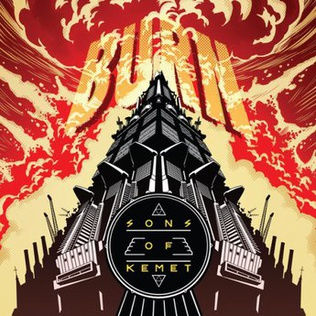
The last ten years or so has been phenominal if you are a fan of jazz music. After four incredibly sparse decades (the seventies, eighties, nineties and 2000's), the artform has truly blossomed into a vibrant genre that may not boast the sheer volume of great music that we had in the fifties and sixties, but one that has more variety than even those idyllic times. If you want a curated starter pack to dip your toe into this resurgance, you know I got you:
Heaven and Earth - Kamasi Washington
In These Times - Makaya McKraven
Tuff Times Never Last - Kokoroko
Kokoro - Sababa 5 & Yurika
Tierra y Libertad - Troker
Black Classical Music - Yussef Dayes
Blowout - John Carroll Kirby
Your Queen is a Reptile - Sons of Kemet
Just outside of the decade time frame sits another Sons of Kemet album, Burn. In 2013, Burn likely felt like an outlier rather than the spearhead of a genre resurgance, and I did not run across any other notable jazz from the year. Similar to Southeastern and country music's return to form, I think most would probably point to 2015's The Epic by Kamasi Washington as the dam-burster when it comes to modern jazz. Still, with the benefit of hindsight, Burn absolutely belongs in that category. One great thing about all of this new, creative jazz music, is that there are so many entry points that might align with your personal tastes. Kokoroko traffics in soul traditions, Yussef Dayes in funk, and Troker in both electronic and mariachi, so they don't sound very similar to each other but have a greater chance of attracting an audience that aligns with something on offer. With Sons of Kemet, they are sonically and spiritually aligned with psychedelic hard rock in the vein of Goat or The Budos Band. While there are a handful of quietter tracks on the album ("The Book of Disquiet", "Adonia's Lullaby", the stunning Melodians cover "Rivers of Babylon"), there is never a break in the intensity of the Sons of Kemet's playing. There is always a lot going on instrumentally, from the insistant horns to the pulsing, afro-beat adjacent percussion, and the band works hard to keep you actively engaged in a way that is probably antithetical to how some fans prefer to interact with jazz. If the Miles Davis quintet was cooking, Sons of Kemet are broiling. Burn is an apt title, in fact, and listening to the album conjures images of a bonfire - entrancing and gorgeous but capable of unpredictable flare ups and danger.
(link)
Honorable Mentions
R&B/Funk: Shruggy Ji - Red Baraat; The Electric Lady - Janelle Monae; Love in the Future - John Legend; Victim of Love - Charles Bradley
Hip Hop/R&B: Run the Jewels - Run the Jewels; Acid Rap - Chance the Rapper; Saab Stories - Action Bronson; Yeezus - Kanye West; CZARFACE - Czarface; 12 Reasons to Die - Ghostface Killah & Adrian Younge; Event 2 - Deltron 3030; My Name Is My Name - Pusha T
Rock/Metal: Sunbather - Deafhaven; The Rain Plains - Israel Nash; Corsicana Lemonade - White Denim; The Terror - The Flaming Lips; Lightning Bolt - Pearl Jam; Meir - Kvertalek; Nanobots - They Might Be Giants
Country: In Time - The Mavericks; 12 Stories - Brandy Clark; Cheater’s Game - Kelly Willis & Bruce Robinson; Same Trailer, Different Park - Kacey Musgraves; Tin Star - Lindi Ortega
Folk: Ghost on Ghost - Iron & Wine; Beautiful Africa - Rokia Traore; Sketches of Ethiopia - Mulatu Astaske; The Civil Wars - The Civil Wars; Magpie and Dandelion - The Avett Brothers; Tall Tall Shadow - Basia Bulat


Comments