


The Greatest Albums of 1972

Welcome to 1972, where we will encounter a Hall of Fame worthy collection of rocket men, star men, pusher men and supernauts.
Against my better judgment, I’m undertaking a project to determine my top 10 albums of every year since 1960. Instead of just picking my favorite stuff out of my collection, I intend to explore, re-visit and discover. While I can’t promise to leave no stone unturned, I am going to go deeper than I ever have before. Why would I partake in a journey that will inevitably take many years and that I ultimately may never finish? Most importantly, to uncover great music that I’ve never heard before. Second, to boost my knowledge of music history and get a sense of what was happening at a macro scale in a snapshot of time. Finally, I want to share my passion for music with you and, fingers crossed, generate a dialogue down in the comments. So without further ado, here is #40 in the series. My random number generator tells me that our next year to explore is 1979.
Check out my previous entries here (and here for the older ones that didn't port to the new site in the prettiest fashion.)
The Greatest Albums of 1972

As we round the corner on the second third of this project, I find myself contemplating its ending, and what that will look like. Not for Found or Forgotten itself necessarily (although maybe I’ll turn it into a book), but for me and the way that I consume music. You might think that removing the need to explore a hundred or so albums for every year I cover would represent a freedom or lack of pressure associated with music listening, but in some ways it's a little scary. What will I replace all of that time with? I obviously throw on an album or playlist to suit my mood quite often, this thing hasn’t supplanted all of my music listening, but the project has become an automatic feeder for those times that I want to listen to something but don’t have a strong opinion on what. Am I supposed to go back to deciding what to play all the time? With approximately double the amount of music that I had at my disposal before I started this? How can I be expected to ever decide? Am I going to turn into one of those people who types in a general prompt and lets the algorithm feed them a stream of songs? The reality is, I’ll probably find some other method for exploring music and organizing my listening. While it's tempting to think that I will have crystalized my opinions on the sixty years of music accounted for in Found or Forgotten, that moment will never actually come. For which I’m thankful, because the satisfaction of unearthing a heretofore unfamiliar classic or finally achieving appreciation for a work that has been elusive in the past is a feeling that I never want to run dry. With cool new tools like Gnoosic, my exploration can continue unabated, even if I no longer document it for posterity.
As far as the music of 1972, I’m not sure what to say at this point. I’ve long made clear my contention that this is the best era of music, and this is another occasion where the top ten is pretty spotless. Most of my thoughts about the state of the music world during this time have already been explored in my intros for 1970, 1971, 1973 and 1974. One element that feels slightly distinct as I sat with the tunes of ‘72, is the emergence of great records that are not of American or European origin. With a few exceptions, my research into the prior twelve years of music didn’t seem to yield a lot of South American or African results. The dam broke in 1972, with several honorable mentions to the likes of Fela Kuti, Mulatu Atstake and Milton Nascimento & Lo Borges, as well as a top 10 nod to Brazilian act Novos Baianos. I’m as big a fan as anyone of the Eagles, Led Zeppelins and Marvin Gayes that dominated the seventies, but this feels like a turning point in expanding the palette of what American audiences could expect to encounter during the richest period in recorded music history. Why, the top slot is even reserved for the intergalactic, not just the international...
The Rise and Fall of Ziggy Stardust and the Spiders from Mars – David Bowie
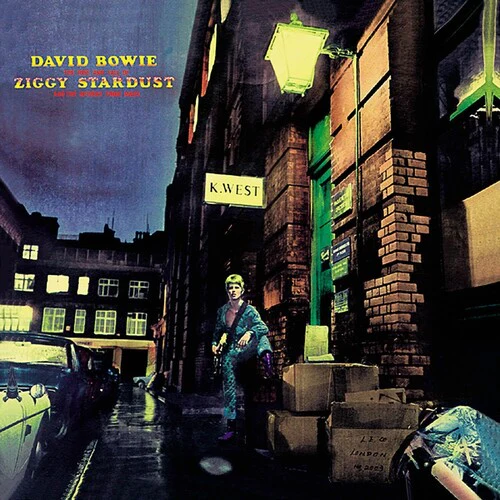
I often think that David Bowie: the figure; the iconoclast; the icon, is more important than David Bowie: the musician and songwriter. The things that immediately jump to mind when I consider Bowie are the personas and the fashion (the Starman, the Thin White Duke), or a clip of him calling out MTV about a lack of diverse representation (ironically aired on MTV), or him and Bing Crosby in their blue sportscoats in front of that tinsel-laden Christmas tree. If I think about Prince for comparison, a similarly mercurial and individualistic genius who also happened to pass away in 2016, I actually conjure up the opening guitar lick of “When Doves Cry” or the insistent groove of “Dirty Mind” ever-so-slightly before I think of his cheek with SLAVE scrawled across it, or the assless chaps, or the incendiary performance of “While My Guitar Gently Weeps” in that red fedora that burnt the Rock and Roll Hall of Fame to ashes like the time-travelling blues setpiece in the second act of Sinners. In other words, for two universally-revered artists with decades-long careers, one stands out for the music and one stands out more for the stuff around the music. To me, at least, and I’m the one writing this, so I’m not sure what other perspective I’m supposed to convey. What is surprising about that, though, is that Bowie is an excellent musician and songwriter. I suppose I don’t love very many full projects from the man, but “Life on Mars” and “Panic in Detroit” and “Memory of a Free Festival” are every bit the equal of “The Ballad of Dorothy Parker” and “When You Were Mine” and “Rasberry Beret”. Those tremendous songs just tend to not accumulate on individual records the way they did for Prince, or to use a couple of Bowie’s contemporaries that share this list with him, Stevie Wonder or Elton John. Hunky Dory, which landed at #10 on my 1971 list, is an example of a complete project by Bowie, but there is only one entry into his catalogue that is truly perfect.
Ziggy Stardust (let’s just use the abbreviated name from this point shall we) is a rock opera about an androgynous extraterrestrial that saves Earth from an impending apocalypse by… rocking? The story is not particularly comprehensible, but the sci-fi trappings definitely add to the mystery and fun of the whole endeavor. It kicks off gently with the deliberately paced “Five Years”, which informs us of the world’s imminent demise, and the moving ballad “Soul Love”, which reminds us why that demise would be a tragedy. Finally, on the third track, “Moonage Daydream”, we are introduced to the titular, guitar-slinging saviour, Ziggy Stardust. Bowie’s dials have always been maxed out for drama and swagger, and that’s what he brings to the rocking Stardust-focused songs like that one and “It Ain’t Easy”. Could even Prince pull off the part of “Suffragette City” where the music drops out and he unironically yelps “Wham, Bam Thank you, Ma’am!”? In my mind, only two people who ever lived could make that work, Bowie and Little Richard. Musically, the album is a blend of psychedelic, glam, and arena rock, and that particular amalgamation sounds incredible. That is far from a given when it comes to the time period. For as much as it influenced new studio techniques and experimentation, psychedelic music was not well-served by the era that birthed it. Modern psychedelic music, a surprisingly ubiquitous sub-genre as of late, reaps the benefit of advanced studio technology which allows precise fine-tuning in service of the particular sound that is desired. That certainly wasn’t the case in 1972. Fortunately, David Bowie side-steps this problem on Ziggy Stardust by pairing his psychedelic tendencies with a take on the type of bombastic, guitar-driven rock typified by the Stones, Led Zeppelin, and the Who. That type of music has had the opposite trajectory as psychedelic rock, actually feeling more sterile and less muscular due to modern production techniques. The resulting blend of trippy ballads and flashy rockers offers a dynamic and consistently excellent experience, and it ultimately just sounds super cool. Like Aquemeni cool or Purple Rain cool - top of the tops.
(link)
Exile on Main St. - The Rolling Stones
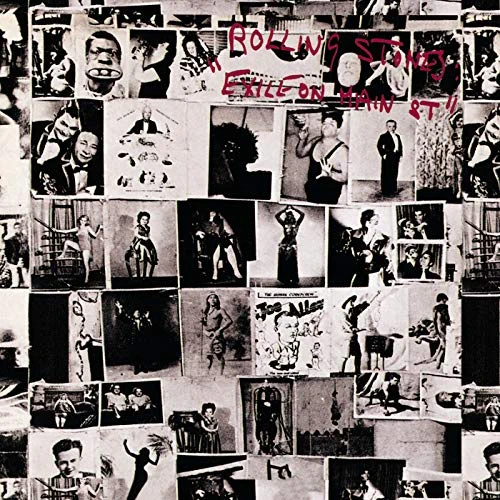
The Stones were on an incredible tear heading into 1972. After releasing some of the most formative rock singles the genre has ever seen in the early and mid-sixties, the group transitioned into a series of classic albums, each leaner and meaner than the last: Beggar's Banquet in 1968; Let It Bleed in 1969, and Sticky Fingers in 1971. Based on that trajectory, you would expect their next project to be the tightest and most focused of the band's catalogue to that point. Yet, Exile on Main Street is anything but tight or focused. It's a sprawling, messy double album that has more filler than the prior three records combined. Yet all of that excess and lack of polish make it the most charming Rolling Stones album, a sure contender for their very best in my mind. To be clear, there is very strong material here, particularly the stretch of "Tumbling Dice" -> "Sweet Virginia" -> "Torn & Frayed". Still, I think that if you asked ten different people to trim the run time down to a single album, you might wind up with the exact same track list all ten times. Yet, contrary to my general beliefs around judicious editing in album-craft, I think that Exile would suffer if you stripped away the non-essential cuts. As it stands, the album feels like a single long take recorded at a raucous house party. You can almost smell the stale air and sweat and cigarette smoke in the room. It's as if a random saxophone player would wander in off the street and start jamming for a couple of songs or a backup singer might wake up off the couch and jump in halfway through a tune. Then, when Mick Jagger heads to the corner store for another case of beer, the band keeps rolling and Keith Richards steps in to perform lead vocals, despite not being able to sing. And it is all fine, because Mick isn't so much singing on the record as he is doing impressions of Slim Harpo and Merle Haggard anyway. Ultimately, no single element is especially important to the success of the album, they are all equally in service to the music's primal swagger. As double albums go, Exile on Main Street is a unique example. When I have previously rated double LPs on this platform, I invariably tempered my praise with an assertion that they would be stronger with less material. In this case, even the weaker moments build on the ramshackle, chaotic whole. It is perhaps the best case of adding up to more than the sum of its parts in classic rock history.
(link)
Super Fly (Original Motion Picture Soundtrack) – Curtis Mayfield
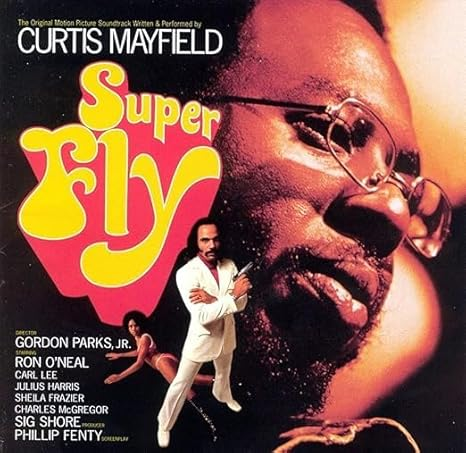
Even though I write about movies on Flip Flop Slap Fight, I certainly don’t consider myself an expert on cinema. I’m not sure I consider myself an expert on music, either, but I suppose that has not stopped me from sharing copious opinions on the subject. All of that said, I did go through a bit of a “blacksploitation” phase many years ago, and I have some thoughts on the genre. Shaft is probably the gold standard for professional production and hiding the relatively limited resources that the filmmakers in that arena were working with. Dolemite, and most of the other Rudy Ray Moore vehicles, are perhaps the least competently crafted but the most fun to watch. Superfly falls somewhere in between. Ron O’Neil is a fine leading man, though not nearly the actor that Pam Grier or Richard Roundtree is. I recall the film having a strong visual style and economic storytelling, but its micro-budget and modest ambitions make it less memorable than many of its contemporaries. The legacy of Super Fly, to me at least, seems to start and end with one of the greatest soundtracks of all time.* Like Isaac Hayes with Shaft and Marvin Gaye with Trouble Man, the filmmakers tapped a prominent soul music figure to score the entire film, and Curtis Mayfield produced an album that manages to tell the story of Super Fly at least as well as the movie that it accompanies.
Curtis is a world-class songwriter and arranger, truly a genius in that regard. Yet, somehow that genius rarely translated into great album-length projects. I consider individual tracks across his time with The Impressions and his solo career among the best of all time**, but for whatever reason, it took the constraints of scoring a tiny blacksploitation film to pull a truly classic album out of him. It shouldn’t be surprising how well Mayfield incorporated traditional funk with more score-appropriate orchestral elements, since he has always excelled at combining bold musical flavors to multiplying effect. Look at the massive horn line in “Move On Up”, the freaky sound collage that bifurcates “We People Who Are Darker Than Blue”, or the way he uses prominent string sections to either sweeten a track (“So In Love”) or darken it (“Kung Fu”). On Superfly, Mayfield wrangles an in-studio band of 40+ musicians without losing the punch of any individual song. The highlights are all excellent, deeply funky ruminations on the relationship between drugs, crime, and the lack of opportunity for those born into poverty in the ghetto: “Pusherman”, “Freddie’s Dead”, “Little Child, Running Wild”, the title track. He diverts his attention briefly for his sexiest ever love song (“Gimme Your Love”) and while the instrumental cuts aren’t destined for a best-of career retrospective, they function just was well as album cuts as they do as a backdrop for the action on screen (“Junkie Chase”, “Think”). Curtis’ vocal performance is nothing if not invested, and he wields his rich falsetto to underline all of the drama and tragedy of the story he is telling. It is a masterful soundtrack, and functions as an equally excellent concept album along the lines of There’s a Riot Goin’ On. I’m thankful that it exists for a myriad of reasons, but not least of all that it gives me a chance to praise one of my musical heroes in this space where the format will preclude other musical luminaries like Charlie Parker, Patsy Cline, and LL Cool J.
* Soundtracks fall into a variety of different flavors, each of which have their share of great albums. I really don’t mess with traditional movie scores, but that is probably the biggest category in the genre. Some of the truly elite soundtracks are produced in conjunction with movies that operate as a vehicle for the musician themselves (Purple Rain; Help!). I tend to think of these as albums with accompanying movies, rather than the other way around. Then you have the soundtracks that are a singular vision of an artist, but support a project that is separate from that artist - case in point, Superfly and the other blacksploitation soundtracks mentioned above. Sometimes that results in a weird blip in an artist’s discography where you look back and think “what the hell is this thing doing here?”, like Stevie Wonder’s album for the documentary The Secret Life of Plants which sits awkwardly between Songs in the Key of Life and Hotter Than July. Next, you have the ones where a variety of artists are tapped to provide original material for the movie. Friday, The Last Action Hero, and the criminally underrated Judgement Night soundtracks are prime examples of this category.
There is one final type of soundtrack, where existing material is curated to provide a backdrop for a film. I have excluded these types of soundtracks from consideration for Found or Forgotten, under the same rationale that I exclude Greatest Hits albums or other compilations. Yet, I would be remiss if I spent 6000 words talking about the music of 1972 without bringing up the outstanding The Harder They Come soundtrack. Pulling from Jimmy Cliff’s back catalogue (other than the title track, which he recorded for the film) as well as prominent reggae singles from the era, it is perhaps the best non-Bob Marley related document of sixties and seventies reggae that exists.
** What the hell, you know I’m always up for an ancillary list. These thirteen non-Superfly tracks are highly recommended if you want to get a sense of why Mayfield ranks so highly in my personal canon:
“Move on Up”
“Right on for the Darkness”
“Kung Fu”
“We People Who Are Darker Than Blue” - live version off the Dead Presidents soundtrack
“(Don’t Worry) If There’s a Hell Below, We’re All Going to Go”
“People Get Ready” - The Impressions
“Gypsy Woman” - The Impressions
“Now You’re Gone”
“I’ve Been Trying” - The Impressions
“So In Love”
“Keep On Pushing” - The Impressions
“Mighty Mighty (Spade & Whitey)” - The Impressions
“Stone Junkie”
(link)
Acabou Chorare – Novos Baianos

And now, for something completely different. I have always connected with the Brazillian music that I have encountered, Astrud Gilberto or Jorge Ben for instance, but I have never explored it as deeply as I would like to. Nigeria, Jamaica, the UK obviously, all international music scenes that I have spent a lot of time with over the years. It may be that bossa nova, the musical style that I associate most strongly with Brazil, is one that I enjoy at arm's length, where reggae or afrobeat elicit in me a more visceral and immediate reaction. Acabou Chorare, the second album by Brazillian musical collective Novos Baianos, traffics in bossa nova for sure, but also samba and choro and Western rock in a way that makes the entire listen surprising, delightful, and absolutely as engaging as one of my afrobeat favorites, just in a different way. The blend of styles and tempos, male and female voices, and variety of acoustic instrumentation make for a highly dynamic listen that crackles with sprightly energy. The title track is a lovely ballad with sneaky great guitar work. Brazillian music is most synonomous with elevated percussion, but I would say Acabou Chorare is probably the best guitar album of the year, a crazy statement for a field that includes Keith Richards, Tony Iommi, Steve Howe and Duane Allman. "Um Bilhete Pra Didi" is a masterclass of dancing guitar licks, its closest analogue being American bluegrass. Occasionally throughout the tracklist the band will burst into an explosive electric guitar solo, which always catches me off guard for both how unexpected it is and how effectively it adds to the overall presentation. Besides the guitar work, Novos Baianos are incredibly adept at crafting hooks, and songs like "Besta E Tu", "A Menina Danca" and especially "Preta Pretinha", which gets a reprise at the end of the album, are great examples of tunes that have unlimited pop appeal without feeling like cookie-cutter Western pop. The singing is all in Brazilian Portugese, which I suppose could be a barrier for some, but I imagine that this may be the most widely appealing album on the entire list. Its my favorite new discovery of 1972, without a doubt.
(link)
Talking Book – Stevie Wonder

I visited the Rock and Roll Hall of Fame for the first time earlier this year. As a tourist attraction, the Hall was pretty much everything I wanted it to be. As a voting body with supposed authority over the preservation of the history of rock and roll as an artform, the R&R HOF is riddled with the same type of challenges that any non-sports hall of fame faces. Unclear boundaries for what constitutes “Rock and Roll”*, inconsistent application of criteria, oodles of biases, etc. Regardless of how credible you might find the induction process, it still seems to hold weight in our cultural consciousness, at least as much as Grammy wins, if not more so. As I was thinking about Talking Book, and the space it occupies in Stevie’s storied career, I found myself considering if everything he accomplished prior to that record would have landed him in the Hall, had he retired, for instance, in mid-’72. Stevie’s induction in 1989 was a slam dunk on the back of the run that Talking Book kicked off, but I would place 2:1 odds that his story, his sixties singles, and the fourteen albums he produced prior to that run would have landed him in the HOF anyway. Maybe not in the fourth induction class next to The Rolling Stones (who he toured with in ‘72), but at some point in the intervening years. Yet, the step change in creative artistry that Talking Book represents catapults a likely HOF-career into G.O.A.T. territory.
Stevie’s prior two records (Where I’m Coming From from 1971 and Music of My Mind from March of ‘72) were very good, but Talking Book is a fully-formed statement of who he was as an artist in the seventies. It isn’t my favorite of the classic run, but you could argue that he never really improved upon it in any significant way. The range of topics and sonic structures that he explores is incredibly impressive. The album opener is the sweet ballad “You Are the Sunshine of My Life”, a song that could function as a romantic proclamation, but is actually the first of a handful of love songs to his children that Wonder produced over the years. He pivots from that right into the slow-drip synthesizer funk of “Maybe Your Baby”, touching on a favorite topic of his, being strung along by a so-called lover. Contrast that with the tightly constructed supernova of funk, “Superstition”, and you can see that Stevie is operating within a huge swath of sounds even when he is in ostensibly the same lane. He didn’t have a signature funk sound, he had several. Most artists would kill to write and perform something as instantly iconic as the Moog bass riff that propels “Superstition”, much less do it twice on the same song, which Stevie accomplishes by personally knocking out the immediately identifiable drum pattern that opens the track. At least he was humble enough to call in some support for the also-classic horn line. He gets political on the soul-folk of “Big Brother”, shows off his gift for ballads that gently escalate into gorgeous crescendoes (“You and I”), and starts the trend of closing out his albums with an expressive R&B number that switches two thirds of the way through into a cathartic funk breakdown, a feat he repeats on Fullfillingess’ First Finale and disc one of Songs in the Key of Life. None of which conveys the way that all of this varied material flows together into a seamless experience, the experimental musical and vocal choices across the whole endeavor, or the life-affirming joy in which everything is expressed, even the bad stuff. Wonder does not have the highest volume of great music, or certainly the most consistent discography across his career, but the work that he was doing in the first half of his twenties is so profound that it has cemented him as my de facto answer to “Who is your favorite musician?” for the better part of three decades.
* The Hall seems to want to straddle the line between being rock-focused and honoring acts from other genres that have broken through with rock fans. It implies a very rockist view of the universe where Rock and Roll is the sun around which everything else orbits, and only the very best of jazz, hip hop, et al are worthy of making the cut. All of which leads to Miles Davis, Tupac Shakur and Bob Marley being treated with the same esteem as third and fourth tier rock acts like Bon Jovi and Chubby Checker. The case could certainly be made for the Hall to keep tighter reigns on what artists are considered for induction, or to expand to a more inclusive “Popular Music Hall of Fame”**, which would open the floodgates for less obvious but still accomplished artists of all stripes. I would also most likely dash the hopes of Ratt and Coldplay and Third Eye Blind, all of whom are destined for the Hall as they try to squeeze in more and more rock acts each year. For what it's worth, I went ahead and logged my vote for the Wu-Tang Clan and Iron Maiden to headline this year’s class.
** Of course, expanding to the more generic “Popular Music Hall of Fame” opens up its own set of challenges. Ostensibly limiting the hall to a rock focus implies some clear geographic boundaries that would be eliminated with a broadened mandate. That would require a complete rethinking of the rules and the voting body, just to name a couple of complications. Eight of the ten artists represented on this list are HOF inductees, and you probably won’t be surprised to learn that they all sing exclusively in English, and the two non-HOF artists do not.
(link)
Vol. 4 – Black Sabbath

I am still coming to terms with how important Black Sabbath is, yes, to the world, but also to me personally. It’s not exactly like they were a blind spot that I recently discovered. I owned Paranoid on cassette as a pre-teen and saw them headline Ozzfest in the nineties. I’ve always enjoyed their music, but they are continuing to grow in my estimation. The other day my daughter asked me who I liked better: Metallica or Black Sabbath? Had she simply asked my favorite metal band, I would have said Metallica without hesitation, but phrasing it that particular way caused me to hesitate for a good ten seconds before declaring, perhaps without conviction, that Metallica was indeed the answer. Metallica may have perfected the genre - there has been loads of great heavy metal in the last forty years but it hasn’t gotten any better than Master of Puppets - but Sabbath practically invented the form while paradoxically remaining one of its most singular sounding artists.
Vol. 4 concludes the band’s initial run of great albums that started with their self-titled debut in 1970. They would go on to have more strong moments with Ozzy at the helm, but their next fully successful project wouldn’t come until they reinvented themselves with dynamic front man, Ronnie James Dio. The band’s fourth album is also the most sophisticated work they would do with Osbourne, showing off complex song structures and precision without sacrificing the grit and genre-defining heaviness that were already their hallmarks. “Wheel of Confusion” kicks off the album like you are dropping into a straight blues record, before shifting into a classic, down-tempo Sabbath groove, then shifting again after several minutes into a 60’s psychedelic rock denouement. They proceed from there with assurance, confident that can achieve whatever they set out to create, regardless of how far afield from their comfort zone. Whether it’s the experimental instrumental tracks “FX” and “St Vitus Dance”, or the melancholy R&B of “Changes”*, they are never outmatched by the material. And when they get back to their signature sound, like on the blistering back-to back pairing of “Supernaut” and “Snowblind”, they make sure to deliver the best version of that type of thing that they are capable of.
*By now, everyone is probably aware of Charles Bradley's 2016 cover of the song, which has become the definitive version in my opinion. It's worth noting, though, that Ozzy actually acquits himself to the soulfulness of the track very well. While not a traditionally accomplished singer in the American Idol sense, Ozzy had a surprisingly versatile singing voice and gift for phrasing.
(link)
Malo – Malo

Popular music has a long history of famous brothers, either performing together or seperately. On some occasions, those brothers recieve generally equal billing: Greg and Duane Allman; Don and Phil Everly; Pusha T and Malice. Usually, though, one brother enjoys an elevated status in relation to his siblings: Bootsy vs Catfish Collins; Brian Wilson vs Dennis and Carl; MJ vs the rest of the Jacksons. If you asked virtually anyone who Van Halen was named after, they would tell you Eddie, despite the fact that he co-founded the group with brother Alex who has a drum sound that is just as identifiable as the vaunted finger-tapping of Edward. One guitar player who can legitimately lay sole claim to his band's namesake is Carlos Santana. What most people don't realize*, however, is that Carlos has a guitar-playing brother who also founded a jazz-influenced Latin rock band about five years after the formation of Santana. Malo does not have the level of acclaim or extensive discography of Carlos' outfit, but their self-titled debut is right up there with Abraxas as the best project that either group ever produced. Comprised of six songs, none of which is shorter than six and half minutes, Malo is one of the more consistently excellent records of the era. While those song lengths are common for seventies progressive rock acts like King Crimson, Yes and Pink Floyd, Malo performs them with unique urgency. Don't get me wrong, I wouldn't trade the atmospheric first four minutes of "Shine On You Crazy Diamond Parts I-V" for anything, but the fact is that virtually nothing happens musically during that stretch. It can work out great for some of the era's best musicians on one of the decade's defining tracks, but there is plenty of dead space on a C-tier Genesis record with twelve minute songs. Hell, that's true for Santana as well. On Malo, every note is attacked with intention and passion, even in the slower moments, so you get the sense that "Pana" is a seven minute song, not a four minute tune with a bunch of fluff added at the beginning and end. It also helps that the grooves that Malo finds are sturdy enough to keep your attention and support the superb improvisation that the band performs across the elongated run times. When I cue up "Suavicito", a common occurrence in the warmer months, I'm always left wanting more as the final notes fade away. That track is an album highlight and the band's highest charting single of all time, a supple and airy ballad with deft instrumental layering and georgious harmonies. Yet, the propulsive funk-rock of "Cafe" and "Nena" are just as catchy and intricate, with the latter's horn line rivaling the aforementioned "Move On Up". You would be hard-pressed to find a single complacent or unsuccessful moment on Malo, which makes it one of the most underappreciated records of the time. If you are reading this close to when I posted it, it's summer time, and there couldn't be a better album to soundtrack a hot day on the patio - don't sleep on it any longer.
*Despite the fact that I've owned and enjoyed this album for well over a decade, even I didn't know Jorge Santana existed until I started preparing for this review.
(link)
Honky Chateau – Elton John

Elton John's placement in Found or Forgotten will inevitably fall well short of his considerable impact on music culture in general, and myself specifically. A lot of it has to do with the time frame in which he put out his best material. The first half of the seventies is simply the era with the highest saturation of remarkable albums, during a time when crafting a cohesive album was taken as seriously as it ever would be again. Elton can go track for track with anyone, but he always let a couple of filler tracks slip in. The difference between Honky Chateau ranking at number eight versus four or five slots higher simply comes down to the relative medioctrity of songs like "Slave" and "Hercules", and has nothing to do with the highs that the album achieves. Look at "Rocket Man (I Think It's Going to Be a Long, Long Time)" - By all rights, that is a song that should have exhausted all of its impact already, worn away from countless radio plays, movie placements, and general pop culture ubiquity. Yet, I still enjoy it nearly as much as the first time I heard it (probably more, actually, because I couldn't sing along the first time). It takes a special kind of magic for a song to remain resonant after so much exposure, and that is a feat that EJ achieves all over his catalogue ("Daniel", "Bennie & the Jets", "Tiny Dancer"). Many of the deeper cuts are also among the best of the year. Bernie Taupin, who wrote lyrics for most of John's best material, may never be better than on "I Think I'm Going to Kill Myself". The track treats a really dark concept with cheeky humor, turning it into an examination of the typical teenager's self-centered flair for drama: "Yeah, I'm gonna kill myself. Get a little headline news. I'd like to see what the papers say on the state of teenage blues." Elsewhere, the duo craft the stunning, delicate "Mona Lisas and Mad Hatters", whose lyrics are far more esoteric but imbued with tons of pathos through John's virtuoso vocal performance. If the format I chose for this blog happened to be a top ten song list, there is a legitimate chance that all three of those make my top ten, but that's not how we started out approximately 42 years ago when this thing kicked off. So, while Elton John may never crack the top spot on one of these lists, or conceivably even the top five, he remains one of my most treasured artists nonetheless.
(link)
Young, Gifted and Black – Aretha Franklin
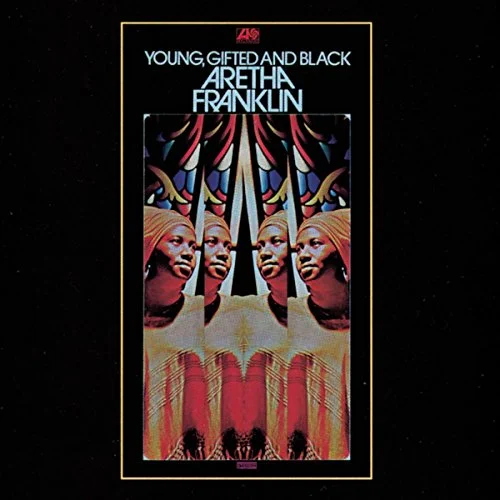
I have burnt holes in three large crab pots over the past decade or so. The first one was thirty years old, so I'll grant myself a pass on that one. The other two were cheaper, not nearly as well made, but that still probably falls on me. When you steam crabs, the trick is to use as little water as you can so that you don't end up just boiling them, but the problem is that a lower water level evaporates faster and a dry pot has a harder time holding up to the flames. My rig is regulated by two valves, one on the propane tank and one where the hose meets the burner. Either one of those, or both in concert, can choke back the heat in a way that would prevent such an outcome, but it can be tricky to fine tune the water level, the heat level, and the optimal speed at which you cook a batch of crabs. Trickier still after a six-pack of beer. What does this have to do with Young, Gifted and Black, you might ask? Am I distracted by the fact that my family is planning to hold our first big crab feast in several years this summer? Well, yes, its on my mind, but there is a deeper metaphor at play. When I think of the singing of certain artists, Whitney Houston or Frank Sinatra, for example, I picture a scalpel. The dominant impression I get is one of technique, even though their power, vocal tone, and emotional resonance is also excellent. With Aretha, and Chris Stapleton for a more modern example, I picture a faucet or the type of burner that I use to steam crabs. Again, it isn't that she's not technical - she's one of the most talented vocalists we've ever heard - it's that the first order of operations seems to be figuring out how much of her absolutely primal force of a voice is required to perform the job at hand, and regulating the output accordingly. "Day Dreaming", for instance, is one of my favorite tracks on this album, and it calls for a slow simmer, maybe 30-40% of full-blast Aretha. The reason it is such a breezy, wistful listen, is that she knows what is called for. She isn't going to burn a hole in the pot. That use of thoughtful dynamics is present all over Young, Gifted, and Black, which allows Aretha to weave in covers of Elton John, Nina Simone and the Beatles that not only flow seamlessly with her original material, but have a point for existing beyond filling out the run time. Whether she is popping off on the funky and insistent "Rock Steady", or building to the big climax of "All the King's Horses", I'm still not sure she has the valve open more than 75% of the way. 100% open, the kind that leaves the crabs blackened, the pot ruined, and the resulting inferno leading to a fire code violation, she reserved for televised Lincoln Center performances and forcibly reintroducing Celine Dion to the pecking order on VH1 Divas Live.
(link)
Harvest – Neil Young
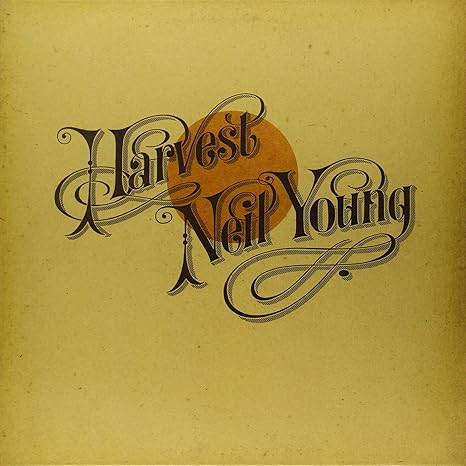
My favorite Neil Young album has always been 1970's After the Goldrush, but that is a bit of an outlier in his discography. With it's more overt country influence and lyrics that touch on mysticism, it feels more like a companion piece to the two Grateful Dead albums from that year (American Beauty & Workingman's Dead). Harvest is the quintessential Young album. Obviously, folk music is the predominant sound, but it bridges early rock and roll with a more modern, jagged version of rock that flashes elements of post-punk (despite being pretty much pre-punk in a temporal sense). Ultimately, it is fair to say that Harvest falls into the singer-songwriter mold. Young's songwriting is superb, but that actually isn't all that uncommon in the field. What sets this album apart from the vast majority of singer-songwriter offerings is Young's ability to generate drama within a pretty constrained structure. The type of music that he makes does not really allow for fancy time signature shifts like his prog contemporaries, campy drama like Bowie, or even the variety of tempos deployed by the rock and soul artists on this list. Still, Young manages to craft a scintillating album in a genre that tends to favor earnest somberness over listener engagement. The simplest way he does this is through the rawness of his performance, both vocally and on guitar. He is, yes, earnest, but his singing and playing also matches the emotional tenor of lyrics about heroin addiction, systemic racism, and the universality of longing for love. He has other musical tricks up his sleeve, too. On "Old Man", he doesn't do anything so showy as a key change, but he switches between minor and major chords in the chorus, which transforms how the song makes you feel and turns a solid folk tune into something incredibly memorable. He also invites the London Symphony Orchestra to join him on "There's a World" and the excellent "A Man Needs a Maid", but instead of overwhelming the genteel proceedings with pomp and circumstance, they are folded into the superceding vibe of the album and offer lush, warm accompanyment for the songs. Harvest represents Neil Young at the top of his craft, one of a handful of basically perfect records that he can boast throughout his long and storied career.
(link)
Honorable Mentions
Rock: #1 Record - Big Star; Per Un Amico - Premiata Forneria Marconi; Toulouse Street - The Doobie Brothers; Caravanserei - Santana; Captain Beyond - Captain Beyond; Close to the Edge - Yes; America Eats It’s Young - Funkadelic; Eagles - Eagles; Eat a Peach - Allman Brothers Band; Foxtrot - Genesis; Garcia - Jerry Garcia; Give It Up - Bonnie Raitt; Obscured By Clouds - Pink Floyd; Roxy Music - Roxy Music; The Unnamables - Univeria Zekt; Trilogy - Emerson, Lake & Palmer; War Heroes - Jimi Hendrix
Soul/Funk: Crying Laughing Loving Lying - Labi Siffre; The World Is a Ghetto - War; Roforofo Fight - Fela Kuti and the Africa ‘70; Cymande - Cymande; Back Stabbers - The O’Jays; All Directions - The Temptations; Argus - Wishbone Ash; Is Mandrill - Mandrill; Last Days and Times - Earth, Wind & Fire; Let’s Stay Together - Al Green; Music of My Mind - Stevie Wonder; Pleasure - The Ohio Players; Roberta Flack & Donnie Hathaway - Roberta Flack & Donnie Hathaway; Shakara - Fela Kuti and the Africa ‘70; Still Bill - Bill Withers; Trouble Man (OMPS) - Marvin Gaye; Two Headed Freap - Ronnie Foster; Heads - Osibisa
Jazz: Home is Where the Music Is - Hugh Masekela; Mulatu of Ethiopia - Mulatu Astaske; Let My Children Hear Music - Charles Mingus; Ethiopian Nights - Donald Byrd; Bluesmith - Jimmie Smith; On the Corner - Miles Davis
Country: Touch Your Woman - Dolly Parton; The Words Don’t Fit the Picture - Willie Nelson; Seven Bridges Road - Steve Young; The Willie Way - Willie Nelson
Folk: Pink Moon - Nick Drake; St. Dominic’s Preview - Van Morrison; Clube de Esquina - Milton Nascimento & Lo Borges; Paul Simon - Paul Simon



Comments